
NASMPHD has partnered with Neurocrine Biosciences to evaluate barriers and opportunities for improving routing screening for tardive dyskinesia (TD) among individuals with serious mental illness receiving antipsychotic medications.
The TD Screening Initiative aims to educate and equip those serving individuals with SMI to improve early identification and response to abnormal involuntary movements through consistent screening.
Why This Matters
- Only 2 in 5 patients are screened before receiving a TD diagnosis
- Although newer antipsychotic medications lower the risk of TD, they do not eliminate it. TD may still affect about 20% of individuals taking second-generation antipsychotics.
- Improving routine screening promotes earlier detection, timely intervention, and better patient outcomes.
Annual Meeting Presentation
“Overcoming My Fear of Tardive Dyskinesia”
Lived Experience Blog Post
“To a child, these abnormal involuntary movements were frightening. He couldn’t sit still and moved in ways that felt unfamiliar and confusing to me – repeatedly jutting out his chin and constantly moving his mouth. It wasn’t until I got older that my mother explained these movements were a medical condition caused by his medication.”
What NASMHPD is Doing
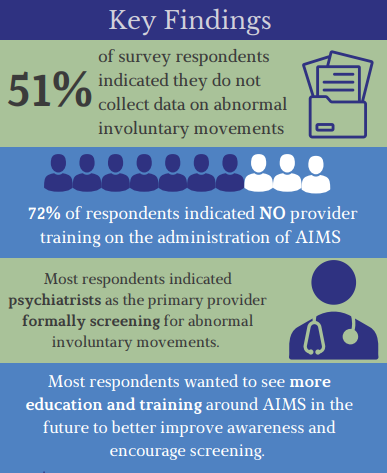
To better understand current practices and barriers, NASMHPD surveyed state leaders on their screening practices.
Based on these findings and identified barriers, NASMHPD developed proposed strategies for policy considerations for state leaders.
Strategies to Improve TD Screening
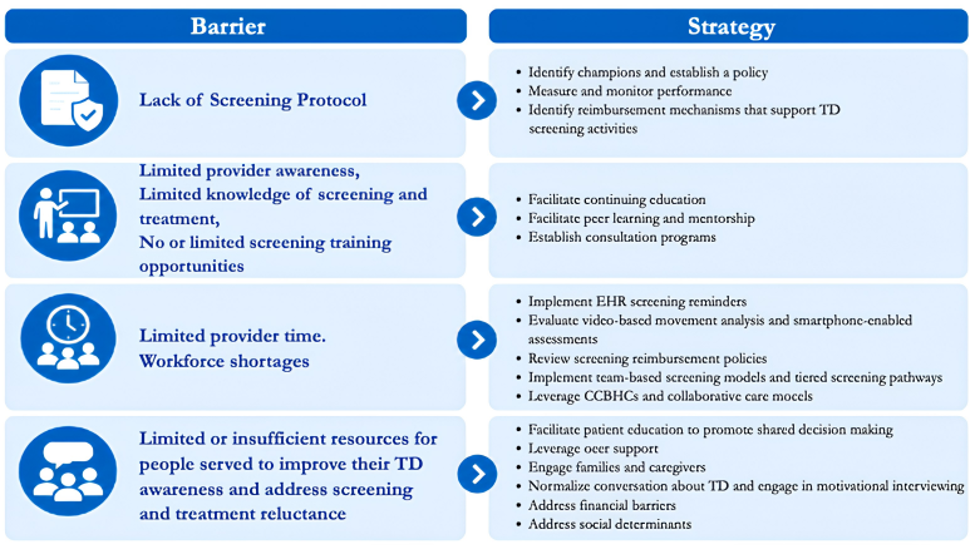
- Establish policy for consistent TD screening in state service systems
- Identify champions to lead improvements in TD screening across the state
- Identify performance measures and monitoring processes
- Review screening reimbursement policies
- Develop continuing education programs in partnership with universities and/or professional associations
- Develop annual TD education programs in partnership with advocacy organizations
- Create peer learning and mentorship programs
- Consider establishing expert consultation programs
- Promote utilization of EHR reminders and clinical decision support tools
- Promote team-based care models
- Integrate TD screening into CCBHCs/CoCM models
- Create tiered screening pathways
- Patient education to promote shared decision making
- Include peer support into care team and care pathways
- Family and caregiver engagement
- Normalize conversations about TD during routine medication management
- Promote motivational interviewing and shared decision-making techniques
- Address financial barriers and social determinants of health that may hinder access to care
More Resources


This project is funded by Neurocrine Biosciences Inc. Acceptance of corporate funds does not imply NASMHPD endorsement of a company’s products, services, programs, or activities.